.png)
ETN welcomes five new cluster members
New members bring expertise across energy storage, recycling, engineering, offshore renewables and well technology
Flex2Future has completed testing, confirming that its floating hybrid energy system performs as designed.

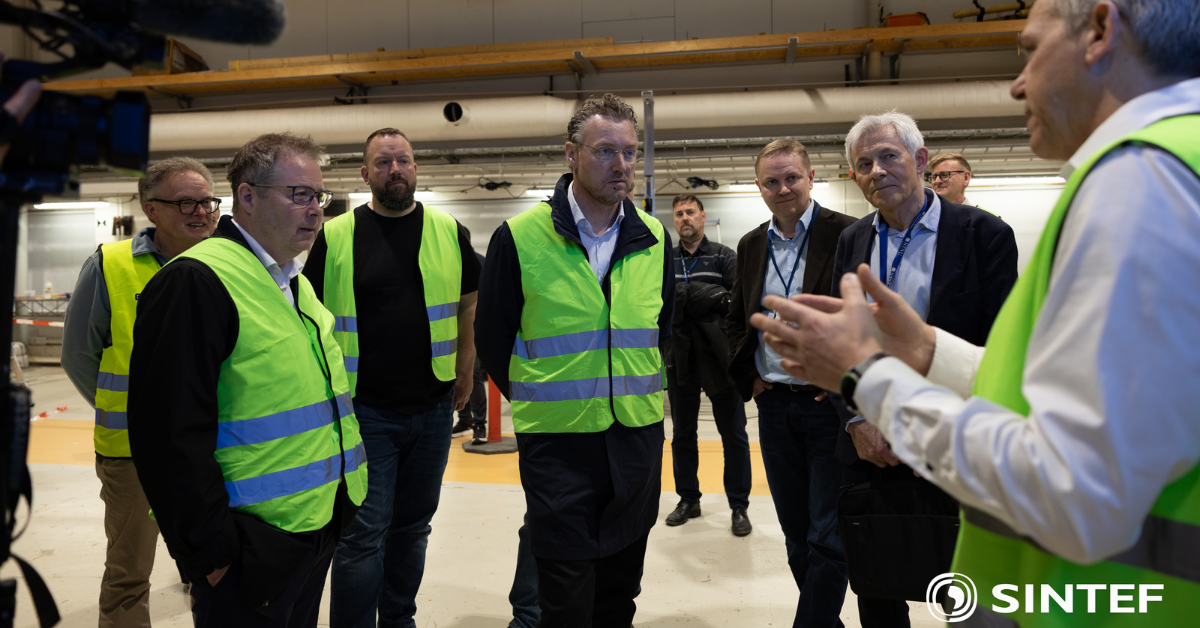

Flex2Future, a member of Energy Transition Norway, has completed a test campaign at SINTEF Ocean in Trondheim, verifying the performance of its floating offshore energy system under a range of conditions, including simulated extreme weather.
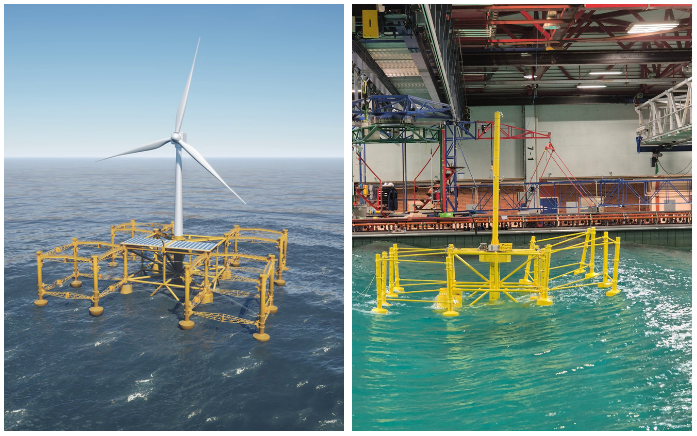
The company is developing Flex2Power, a floating offshore installation that draws on wind, wave, and solar power at the same time. The structure is also designed to generate electricity from its own movement in the water. The idea is that combining several energy sources in one unit produces a more stable and consistent output than relying on a single source — a relevant consideration in offshore environments where conditions vary significantly. Potential applications include powering offshore facilities, aquaculture operations, and remote coastal infrastructure.

Before a technology of this kind can be deployed at sea, it needs to demonstrate that it can withstand the forces it will encounter — not just in normal conditions, but in the worst. The test programme at SINTEF Ocean was designed to do exactly that.
In the Ocean Basin (Havbassenget), the system was exposed to complex wave and current conditions, including scenarios corresponding to a 100-year storm — a standard reference point in offshore engineering for extreme but credible weather events. The results indicate that the structure handled the environmental loads as expected, with stable motion characteristics throughout.
In parallel, the team tested the Power Take-Off system in the Towing Tank (Slepetanken). This is the component responsible for converting the physical movement of the structure into electrical energy — in effect, the part that turns motion into power. Initial results indicate promising efficiency levels under controlled conditions.
One of the more significant outcomes from the campaign was how closely the physical test results matched the predictions made by the company's computer models. In engineering development, this kind of alignment matters: it means the models can be trusted, and that design decisions made on the basis of those models are likely to hold up in practice.
"Seeing such strong alignment between the test data from the basin and our numerical models gives us a high level of confidence. It confirms that our calculation methods are accurate and that the concept performs as intended in the digital design phase," said Erik Svanes (CEO Flex2Future).
With the test campaign completed, Flex2Future is now working through the data collected and continuing to refine the design. The company is also preparing to raise capital to fund a full-scale offshore demonstration — the next major step towards bringing the technology into practical use.