
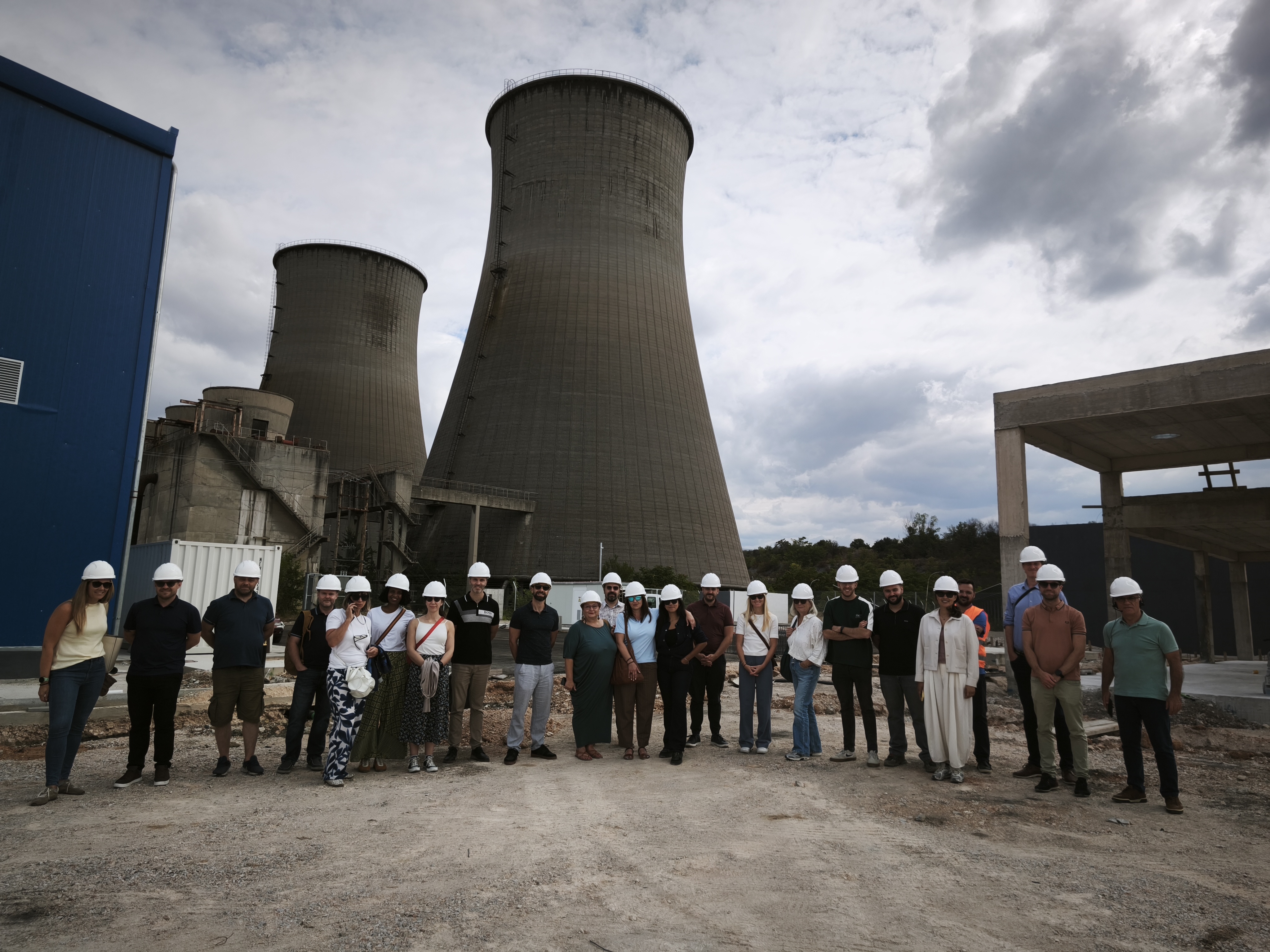
ETN joins COMMIT's seminar in Greece
Energy Transition Norway (ETN) participated in the fifth COMMIT partner meeting in Kozani, Greece.
Ishi Energy develops technology for large-scale thermal energy storage in rock to make better use of surplus heat.



Energy Transition Norway is pleased to welcome Ishi Energy as a new member of the cluster. Founded in April 2026, the company is developing technology for large-scale thermal energy storage, initially targeting district heating and process industries.
For many energy users, the challenge is not necessarily a lack of energy over the course of a year – but having it available at the right time.
District heating companies can have significant amounts of surplus heat during summer, while needing additional capacity on cold winter days. Industrial companies may similarly have access to waste heat or low-cost energy during certain periods, without an efficient way of storing it for later use.
This can result in high peak loads, expensive electricity use, greater pressure on the power grid and the need for fossil energy sources to cover periods of high demand.
At the coreof Ishi Energy's technology is “iCirc”.

Traditional borehole thermal energy storage typically relies on multiple boreholes with pipes transferring heat between circulating fluid and the surrounding rock. iCirc uses a different principle, creating controlled circulation andheat-exchange surfaces directly within the rock mass.
The principle can be compared to a plate heat exchanger: a large contact area enables efficient heat transfer. According to Ishi Energy, this can provide high circulation capacity and energy density while requiring fewer boreholes than conventional systems.
The modular technology is intended to scale from smaller industrial applications to seasonal storage systems in the multi-GWh range.
District heating illustrates the concept clearly.
Instead of rejecting surplus heat during summer, an iCirc storage system can be charged over several months. The stored energy can then be recovered when temperatures fall and demand in the district heating network increases.
Ishi Energy is currently working with cases in Norway and Sweden, ranging from a few GWh to considerably larger seasonal storage concepts. These include surplus energy from process industries and data centres, as well as applications related to critical infrastructure.
The company also sees opportunities in process industries, where surplus heat, solar thermal energy or low-cost electricity could be stored as high-temperature heat and later used directly in industrial processes.
For Ishi Energy, thermal storage is part of a broader energy system challenge.
A large share of energy demand is related to heating and cooling. Storing thermal energy when it is available can help reduce peak electricity demand, free up capacity in the power grid and reduce the need for fossil peak-load generation.
It can also contribute to energy security. Unlike energy that still needs to be produced or transported, a thermal energy store represents energy that has already been produced and is stored locally – providing additional flexibility for district heating, industry and critical infrastructure.
Ishi Energy summarises the concept simply:
We look forward to following Ishi Energy's development and exploring opportunities forcollaboration across the ETN network.