.png)

Energy Transition Norway advances to highest level of Innovation Norway’s cluster programme
Strengthening support for technology development, commercialisation and international growth.
On-site blade manufacturing could cut transport costs and open up new materials.

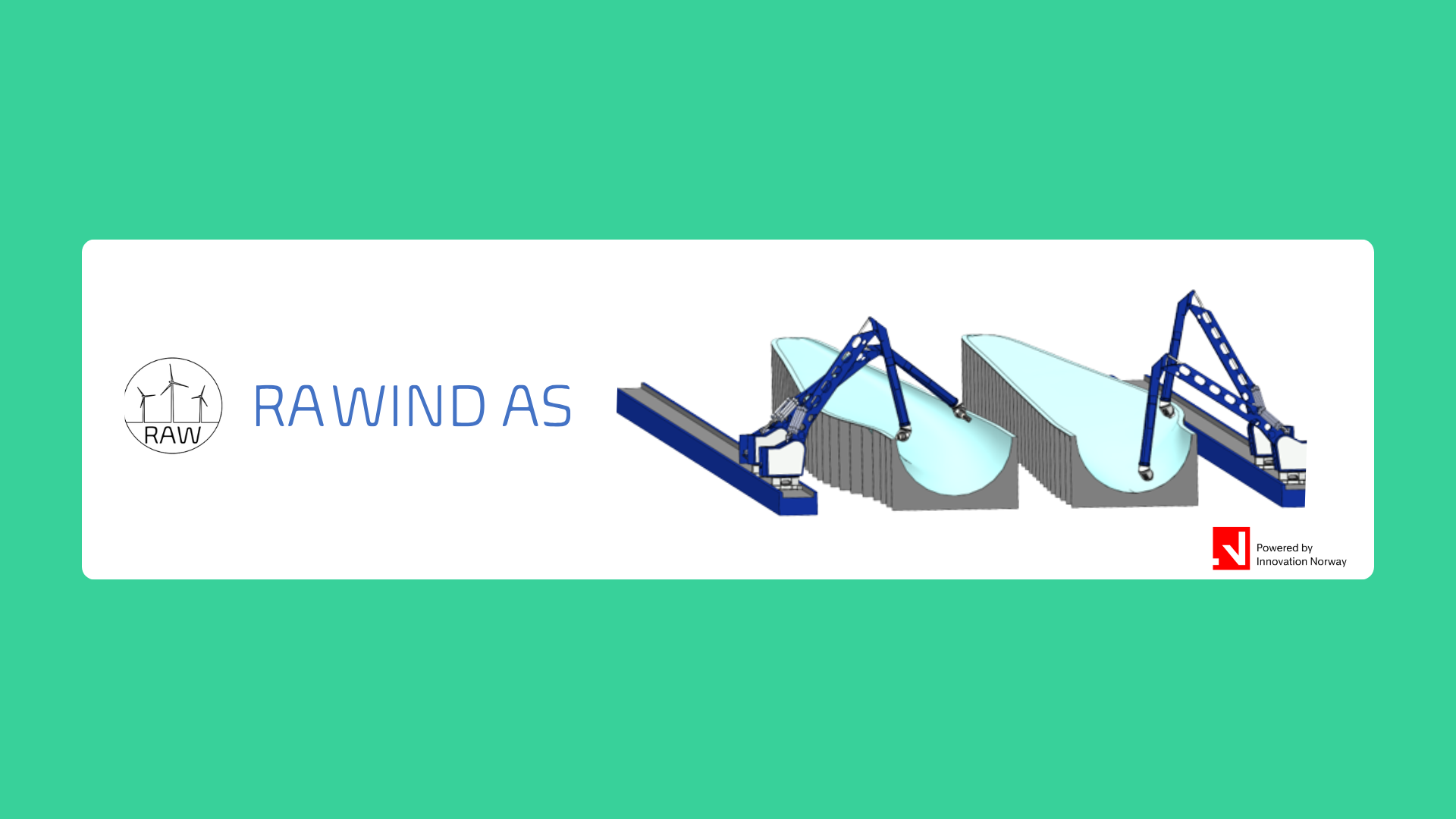

RA Wind AS, an ETN member based in Sandnes, has received a grant of 500,000 NOK from Innovation Norway for a project on robot-controlled 3D printing of wind turbine blades. The company has also completed a capital increase from local investors to match the grant.
Founded in 2023, RA Wind develops rotor and nacelle technology for offshore wind, with turbine designs ranging from 25–40 MW and floating offshore units up to 120 MW. The blade printing project is one part of that broader development effort.
Wind turbine blades are among the most demanding components to produce and transport. Current manufacturing relies on large fixed moulds and labour-intensive composite layup, followed by complex logistics to move blades — which on modern offshore turbines can stretch to well over 100 metres — to installation sites. RA Wind’s blade printing project aims to address this directly: by manufacturing blades on-site using large industrial robots and 3D printing technology, the goal is to eliminate long-distance special transport, allow site-specific blade design, and open up the use of lighter and potentially reusable materials.
The Innovation Norway funding will support technical and commercial clarifications, including 3D printing and analysis of small composite material prototypes and simulation of the robot-controlled printing process. The next planned step is a pilot factory project involving up to four large robots.
"Executionof the Innovation Norway project is a deciding factor for moving thisinnovative project into the prototype stages," said CEO Lars Raunholt.
Reducing the cost of offshore wind at scale is one of the central challenges in Norway's energy transition. On-site blade manufacturing could contribute through lower transport costs, greater design flexibility, and reduced material waste. End-of-life is also a growing concern — most blades today are made from composite materials that are difficult to recycle, and the potential to produce blades from reusable materials from the outset adds a further dimension to the project.
More broadly, RA Wind's ambition is to reduce installation, operations, and maintenance costs for offshore wind by 50 percent through a patented modular turbine design, built around standard industrial components and designed for robotisation and AI. ETN looks forward to following the project as it develops.

