.png)
ETN welcomes five new cluster members
New members bring expertise across energy storage, recycling, engineering, offshore renewables and well technology
Key takeaways from the Risavika Hydrogen Hub Arena webinar.

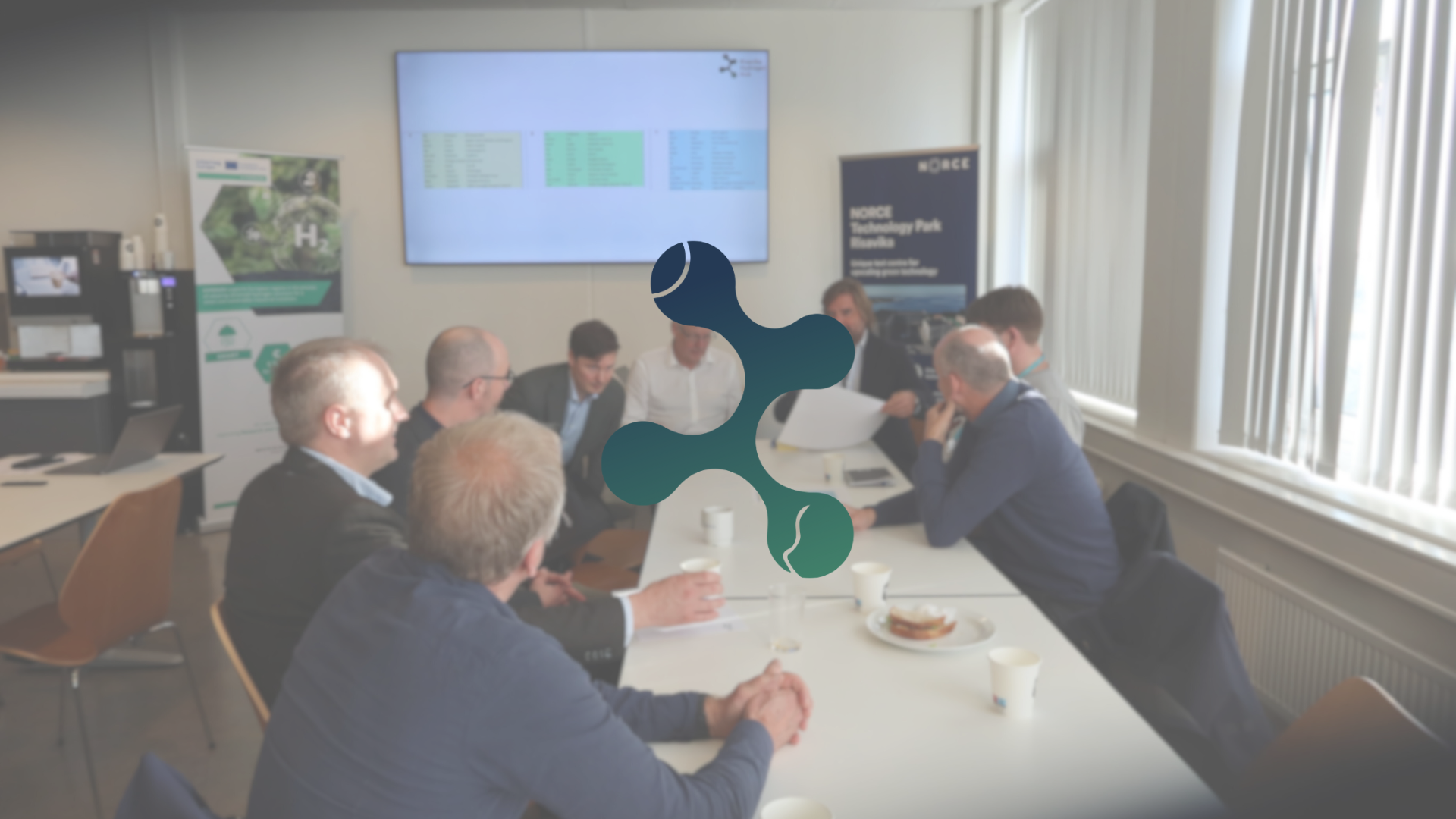

Risavika Hydrogen Hub Arena gathered industry, research and public-sector actors for a webinar on EU funding opportunities relevant to hydrogen and adjacent value chains. The session combined a practical walk-through of current calls, concrete project examples from Norwegian-led EU initiatives, and advice on how to build competitive consortia ahead of upcoming deadlines.
“If I should say something about what it takes to succeed with the transition, there are three factors: the first is collaboration, the second is collaboration, and the third is collaboration,” said Hans Kleivdal (NORCE), Project Manager and Deputy EVP at NORCE, in his opening remarks.
Building on this emphasis on collaboration, Tim Genge (Innovation Norway) presented the newly launched Clean Hydrogen Partnership work programme. While parts of the hydrogen market may feel uncertain, Genge emphasised that the EU is still maintaining pressure on hydrogen deployment.
He also encouraged participants to see EU participation as more than a funding source:
“Don’t think of the EU only as a source of financing - think of it as market access and a strategic lever.”
Genge further highlighted the importance of aligning EU activities with a project’s own strategy and maturity level - both Technology Readiness Level (TRL) and Business Readiness Level (BRL). He reminded participants that early engagement in partnership structures can provide greater visibility and influence on future calls.
Following this strategic overview, ETN’s EU Advisor Kristoffer Moldekleiv provided a more detailed introduction to the Clean Hydrogen Partnership call portfolio launched this week, noting a total budget of around €105 million. He highlighted eight topics in particular, spanning renewable hydrogen production, storage and distribution, end-use applications and Hydrogen Valleys.
Turning to practical experience, Marte Jensen (Maritime CleanTech) shared lessons from EU-funded maritime hydrogen and ammonia projects.
“Find a strong case first - don’t create a project just to fit a call,” Jensen said, stressing the value of mobilising the right partners early and building on existing collaboration.
From project development to large-scale deployment, Ingunn Syrstad (Enova) provided an introduction to the Innovation Fund and the Hydrogen Auction under the EU Hydrogen Bank. The auction is designed for mature projects expected to reach production within five years.
Finally, Sara Vinklatova (NORCE) rounded off the programme with an overview of additional Horizon Europe opportunities beyond hydrogen, particularly within CCU/CCS and industrial decarbonisation.
The webinar reinforced three recurring success factors for EU participation: start early, build strong consortia with clear roles, and align calls with real industrial cases and maturity levels.
Risavika Hydrogen Hub Arena will continue to convene and support actors in developing collaboration opportunities and positioning projects for national and European funding.
Do you have questions or want to explore opportunities for collaboration? Contact:
Hans Kleivdal (NORCE) – hakl@norceresearch.no
Emelie Langmyr-Eriksen (NORCE) – aeri@norceresearch.no